

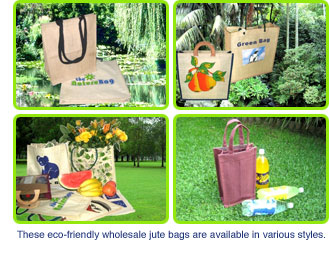
Jute fibre is a totally natural biodegradable and compostable fibre obtained from the jute plant (Corchorus olitorius and Corchorus capsularis) and it is therefore an extremely attractive renewable resource for those who are at the forefront of the environmental movement and those who give top priority to environmental and ecological concerns. Jute, being a very strong natural fibre, is commonly used to produce rope, bags, sacks, hessian cloth, floor coverings, and carpet or linoleum backing. The natural qualities and biodegradability of jute are evidenced by the use of this fibre to produce planter bags so that plants can be planted in the soil while they are still in the bag permitting no root disturbance and quick growth as the planter bag composts into the soil structure. This allows young trees to be planted directly into the soil while still in their containers with no setback due to transplanting. The biodegradability of jute also permits it to be used for land restoration with biodegradable jute cloth being used to prevent erosion occurring while natural vegetation becomes established. Given the strength, durability, and biodegradable nature of jute, it is also ideally suited to the production of natural green bags.
Some of the advantages of jute are listed below:
The Advantages of Jute
- Jute fibre is 100% bio-degradable and compostable
- One hectare of jute plants can consume about 15 tons of CO2 and release about 11 tons of oxygen during the jute growing season.
- Jute fibre is the cheapest vegetable fibre procured from the bast or skin of the plant’s stem.
- Globally jute is the second most important vegetable fibre after cotton in regard to terms of usage, production, and availability.
- Jute fibre has high tensile strength, low extensibility, and ensures better breathability compared to synthetics.
- Jute produces top quality yarn, fabric, and sacks. It is one of the most versatile natural fibres used for packaging, textiles, and agricultural sectors.
- Jute is a renewable resource with a high production per hectare.
- The best source of jute in the world is the Bengal Delta Plain in the Ganges Delta, most of which is occupied by Bangladesh.
- The production of polypropylene fibre, the main synthetic competitor of jute, requires 10-20 times more energy consumption than does the production of jute.
- Jute has the ability to be blended with other fibres, both synthetic and natural, and accepts various dyes such as natural, basic, vat, sulfur, reactive, and pigment dyes. As the demand for natural fibres increase, the demand for jute and other natural fibres that can be blended with cotton will increase. Combined jute/cotton blends may produce fabrics with a reduced cost of wet processing treatments. Jute can also be blended with wool.
- The growing of jute provides an income for more than 4 million farming families in poor communities.
Jute Farming and the Social Advantages of Jute
Jute farming is a very labour intensive process, comprising 60%-70% of total production costs, which produces very low monetary rewards on a per hectare or per ton basis. It has been estimated that 215 man-days of labour are required per ton of fibre with the result that the farmer often earns less than US$0.70 per day for his labour. Notwithstanding these facts around 2-3 million tons of jute are produced every year principally in the main jute producing countries, India and Bangladesh. In spite of the low monetary returns, jute farming supports 4 million farmers and their families in India alone and these farming families are located in some of the poorer areas of India. Jute farmers usually rotate their jute crop with rice. Since they are situated in very high rainfall areas these farmers have limited crop choices and jute is a crop of choice in such locations. As has been noted by the International Trade Centre (8):
“We can note the part time employment jute gives to about 4 million farmers in India and to the several hundred thousand employees in the mills and also needed for raw jute transport and jute goods distribution. As we have noted in the case of agriculture these may be arduous and poorly paid jobs but they are available to people at the bottom of the income scale and for that reason alone these jobs are all the more important for social reasons.”
Jute farmers supply the world with wonderful natural products. Especially in this environmental age, it is vitally important that they receive adequate monetary rewards for their labour. If necessary, jute farmers should receive assistance to restructure their industry to ensure adequate returns.
Environmental Concerns About Popular Non Woven Polypropylene ‘Green’ Bags.
Since non woven polypropylene bags are not biodegradable there are increasing concerns about the eventual environmental impact they will have when their useful life has expired (9,10). Although non woven PP bags may erode into tiny and less visible pieces of plastic, they may still ultimately add to global plastic pollution. The biodegradability of natural fibres such as jute and cotton may result in such products becoming more appealing from a long term environmental perspective.
For a more detailed account of the environmental advantages of jute, especially as compared to polypropylene, see our in depth article entitled Natural Jute Shopping Bags or Synthetic Polypropylene Plastic?
For the above reasons, the use of 100% biodegradable materials such as jute, cotton, or paper, are generally favoured by the organic movement and those who give top priority to compostability and the environment.
For more jute bags click here, or contact us.
- Wikipedia.
- The Ministry of Jute, Bangladesh.
- Jute World, National Centre for Jute Diversification.
- Jute, Kenaf and Allied Fibres, Food and Agriculture Organisation.
- Jute Related Frequently Asked Questions, World Jute.Com.
- Jute & The Environment, International Jute Study Group.
- Jute and Hard Fibres: Overview of Major Current Issues, United Nations.
- A Road Map For Jute, International Trade Centre.
- How Green is Your Bag?, Sydney Morning Herald, 25th April, 2005.
- How Green are Those Green Shopping Bags? Joel Rheinberger, ABC Hobart, 24th Oct 2007.