

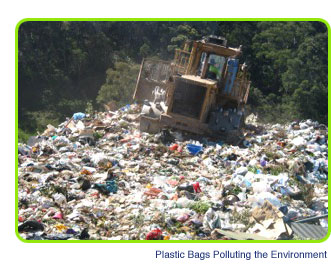
Plastic Bag Pollution and the Environment.
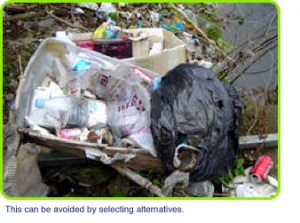
Australia may be only a small country of 20 million people but in 2002 Australians used nearly 7 billion plastic shopping bags (1-5) and it is estimated that up to 80 million of these bags ended up littering our environment (2,3). In Ireland the consumption of 1.2 billion plastic bags annually led to the introduction of a tax paid by consumers (5,6) while British consumers use 8 billion plastic bags annually (7). Globally 500 billion-1 trillion plastic bags are used annually (8,9) or 1 million plastic bags every minute (9), while more than 200,000 plastic bags are dumped in landfill sites every hour (10). More than 4-5 trillion bags were manufactured globally in 2002 (11). Plastic pollution is becoming an increasing environmental problem (8,12-17).
According to the Age Newspaper (18):
“In China, polythene bags blowing around the streets are called ‘white pollution’. In South Africa, their visual presence around the countryside has won them the title of ‘national flower’. In India, multi-coloured plastic bags are everywhere, hanging off trees, lining river banks, blowing down railway lines, choking sacred cows and holding together every pile of rubbish the eye can see. But plastic bags are not only lethal to animals. In Bangladesh, serious flooding that caused major loss of life was linked to plastic bags blocking drains.”
Wildlife Pay the Price for Plastic Bag Pollution.
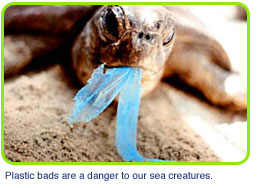
‘Pete’ the Pelican.
The pelican presumably thought the plastic bags were food. The pelican was preserved and named Pete. Since then he has been standing in front of a sign at Fitzroy Falls that informs visitors of how he died and the problems of plastic bags and ocean pollution.
Photos courtesy of Planet Ark and thames21.
- Plastic Shopping Bags in Australia, National Plastic Bags Working Group Report to the National Packaging Covenant Council, 6 December 2002
- Plastic Bags, Briefing Paper No. 05/2004 by Stewart Smith, NSW Parliament
- Investigation of options to reduce the impacts of plastic bags, April 2008, National Environment Protection Council Service Corporation, Level 5, 81 Flinders Street, ADELAIDE SA 5000
- Plastic Shopping Bags in Australia, National Plastic Bags Working Group Report to the National Packaging Covenant Council, 6 December 2002
- No Bag Thanks, Karen Pearce, ABC.
- Irish plastic bag tax set to rise, BBC News, 22nd Feb 2007
- Planet Earth’s new nemesis?, BBC News, 8th May 2002
- Plastic Bag Pollution, Sharon Jacobsen.
- Plastic bags.
- Plastic Bag: Friend or Foe?
- Plastic Bags, World Watch Institute.
- Plastic Debris, Rivers to Sea Project, Algalita Marine Research Foundation.
- A world drowning in litter, David Chazan, BBC News, 2002.
- Campaign Against the Plastic Plague, Earth Resource Foundation.
- Plastic Pollution in the Marine Environment, Joe Farrell, Marine Resource Management Specialist.
- Drowning in an Ocean of Plastic, Stephen Leahy, Wired News, June 5, 2004.
- Plastic pollution, Usha Jesudasan, The Hindu, 6th July 2002.
- Dirty old bags, The Age newspaper, 29th June, 2004.
- Plastic Bag Reduction, Planet Ark.
- Plastic Shopping Bag Kills ‘Temata’, Beaked Whale Stranded in the Cook Islands; ‘A Belly Ache’, Underwatertimes.com News Service, October 27, 2006.
- The Pelican Story Project, Kiama Council.
- Plastic Pollution in North Pacific Seabirds, Bob Day, Geophysical Institute, University of Alaska Fairbanks.
- Seabirds ingest bellyfuls of plastic pollution, Rob Edwards, New Scientist, 08 January 2005.
- Pelagic Plastic, Algalita Marine Research Foundation.
- Planet Ark
- Buy Planet Ark Reusable Bags
- Your alternatives to the plastic bag, BBC News, 29th Feb 2008.
- US reluctant to canvass plastic bag alternatives, The Age, Jan 26 2008.
- Say No to Plastic Bags, Remote Northern Territory Communities, Plastic Bag Survey for Community Stores
- Plastic check-out bag use in non-supermarket retail outlets, Planet Ark Environmental Foundation for the Department of the Environment and Heritage, March 2005
- Plastic Bags, Clean Up the World Pty Ltd.
- Steming the plastic tide, Queensland Government.
- A Guide to Plastic Bag Alternatives, The Green Grocer.